This past weekend, the American Society of Hematology (ASH) held its annual meeting in New Orleans. The buzz leading up to the conference indicated that there wouldn't be any new blockbuster breakthroughs in treating MM to announce. Unfortunately, that proved to be the case. Not to say that there hasn't been significant progress, however. Some of the new therapies continue to show positive results, and they are moving closer to the point of being able to provide targeted therapies for individual cases. In the meantime, a number of new drug therapy options are being explored, which should provide a variety of future options for those of us who will eventually relapse.
This Saturday, I will be attending a patient conference at the Farber, where Drs. Anderson, Richardson, and others will summarize some of the recent advances, including those presented at ASH. I hope to get a better feel about the more promising developments in trying to control or cure this disease. I will provide an update on what I learn at this symposium.
I just read an interesting article in the Myeloma Beacon about MM risk classification. The International Myeloma Working Group (IMWG), recently released a
consensus statement on risk stratification for patients with multiple
myeloma. Here is a link to the article: risk-stratification-multiple-myeloma. Here is a quote summarizing the gist of the article:
"In the new system, determination of a patient’s risk classification is
based on three factors: a patient’s disease stage according to the
International Staging System (ISS); the presence of certain chromosomal
abnormalities in the patient’s myeloma cells based on results of
so-called FISH testing; and patient age.
Patients who are ISS stage II or III and whose myeloma cells contain
the translocation t(4;14) or the deletion del(17p13) are classified
as high-risk. About 20 percent of patients are expected to fall in this
category at the time of diagnosis, with median overall survival of two
years from diagnosis.
Patients who are ISS stage I or II, under the age of 55 years, and
whose myeloma cells do not contain t(4;14), del(17p13), or 1q21 gain
are classified as low-risk. About 20 percent of patients also are
expected to fall in this category at diagnosis, with median overall
survival of more than 10 years from diagnosis.
The remaining 60 percent of patients are classified as standard-risk,
with median overall survival of seven years from diagnosis."
When I was first diagnosed, I was classified as ISS Stage I, which puts me into the standard risk category. However, my b2-microglobulin was just a fraction below and my albumin was just a fraction above the thresholds of my being classified as ISS Stage II. As you can see from the above, with my t(4;14) translocation, had I been classified as ISS Stage II, I should be dead by now!
But I take heart from a number of considerations. First, I believe I caught my MM just in time. Just two months earlier, I had been diagnosed with Smoldering MM. Fortunately, I managed to get an appointment with Richardson just as my MM was rapidly developing. If I had waited a few more months, I may have been a solid Stage II and my prospects might have dimmed considerably. Second, I was fortunate to nail the right induction therapy with the clinical trial using MLN-9708, which put me into a stringent Complete Response (sCR) after 7 cycles. Third, recent studies have shown that use of Velcade (and I assume MLN-9708) along with Revlimid help to mitigate the high-risk effects of the t(4;14) translocation, which further helps push me into the standard risk category. Because of the rapid advances in treatment options, I consider the current standard-risk 7-year Overall Survival (OS) to be low. So I'm projecting at least 10 years for myself, the way I look at it. The bad new for you is that you may be subjected to my blog for an interminable length of time. So there!
On another positive note, the latest research shows that resveratrol, one of the major active compounds in red wine, may effectively kill myeloma cells! Here's a link to the article in the Myeloma Beacon: red-wine-resveratrol-and-multiple-myeloma-the-evidence-is-promising-but-needs-further-study. I just poured myself a glass of red wine. Cheers!
Wednesday, December 11, 2013


Monday, December 2, 2013
Birthday Boy
Gretchen and I spent my birthday today at the Farber. Woohoo! One might think that there would be better places to celebrate one's birthday, but I don't think so. Without the Farber, I might not even have been around for this occasion, so perhaps it's fitting that I could celebrate it at the place that has gifted me with more birthdays. It has been almost two and a half years since my diagnosis with MM, and I am still going strong. The next milestone will be March 20, the 2-year anniversary of my "second" birthday, the day of my stem cell transplant.
The blood test results today were good again. Some of the numbers I was concerned about last month have bounced back, and there is still no sign of any monoclonal gammopathy. I'm still feeling good, and I haven't been quite as tired lately. Maybe that's because my anemia numbers showed some improvement this month. In any case, I am grateful for my continued remission. Happy Birthday to me!
Today, we had the pleasure of meeting with fellow patient, Dee, for lunch in the Farber cafeteria before her appointment with Dr. Richardson. It was really helpful to exchange our stories. Her expertise in scanning electron microscope (SEM) imaging is intriguing. As a previous sufferer of chronic Lyme Disease (as was I), she thinks she has found evidence of the Lyme bacteria Borrelia burgdorferi (Bb) in her bone marrow samples using SEM. Bb doesn't stay in the blood stream, as it burrows into various tissues in the body. The available blood tests for Lyme can only check for antibodies that have been mobilized to fight the bacterial infection. The only way to actually find the bacteria itself is to biopsy tissue samples, which has been done in some cases. I think it would be really interesting and important to test bone marrow biopsy (BMB) samples for the possible presence of Bb in MM patients, as Dee has tried to do for herself. There may be more sensitive means to do this than SEM, such as focus floating microscopy (FFM), but it would be worth trying to explore this potential connection in more detail.
It's intriguing to think that Bb can find its way into the bone marrow for Lyme Disease sufferers. It's also intriguing to postulate that once it's there, this bacteria could trigger potential genetic mutations leading to MM. Hmmm. I'm just thinking out loud here (of course this is a figure of speech, as I'm writing not speaking, or would that be a "figure of text"?).
I know the medical community in general poo poohs any discussion or research into Lyme Disease for mysterious reasons that I'm sure have a lot to do with money. But my prejudices aside, it might be difficult to have insurance companies pay for testing tissue samples for Bb without any established connection, so patients may have to shell out of their own pockets to have such a test done.
So the plot sickens.
The blood test results today were good again. Some of the numbers I was concerned about last month have bounced back, and there is still no sign of any monoclonal gammopathy. I'm still feeling good, and I haven't been quite as tired lately. Maybe that's because my anemia numbers showed some improvement this month. In any case, I am grateful for my continued remission. Happy Birthday to me!
Today, we had the pleasure of meeting with fellow patient, Dee, for lunch in the Farber cafeteria before her appointment with Dr. Richardson. It was really helpful to exchange our stories. Her expertise in scanning electron microscope (SEM) imaging is intriguing. As a previous sufferer of chronic Lyme Disease (as was I), she thinks she has found evidence of the Lyme bacteria Borrelia burgdorferi (Bb) in her bone marrow samples using SEM. Bb doesn't stay in the blood stream, as it burrows into various tissues in the body. The available blood tests for Lyme can only check for antibodies that have been mobilized to fight the bacterial infection. The only way to actually find the bacteria itself is to biopsy tissue samples, which has been done in some cases. I think it would be really interesting and important to test bone marrow biopsy (BMB) samples for the possible presence of Bb in MM patients, as Dee has tried to do for herself. There may be more sensitive means to do this than SEM, such as focus floating microscopy (FFM), but it would be worth trying to explore this potential connection in more detail.
It's intriguing to think that Bb can find its way into the bone marrow for Lyme Disease sufferers. It's also intriguing to postulate that once it's there, this bacteria could trigger potential genetic mutations leading to MM. Hmmm. I'm just thinking out loud here (of course this is a figure of speech, as I'm writing not speaking, or would that be a "figure of text"?).
I know the medical community in general poo poohs any discussion or research into Lyme Disease for mysterious reasons that I'm sure have a lot to do with money. But my prejudices aside, it might be difficult to have insurance companies pay for testing tissue samples for Bb without any established connection, so patients may have to shell out of their own pockets to have such a test done.
So the plot sickens.
Saturday, November 30, 2013
Thanksgiving
So far, this has been a delightful holiday season. Last weekend, we drove to New Jersey to visit with Brian, Pam, and our grandson, Logan. We had a wonderful time! We were then able to celebrate Thanksgiving at our house with sons Jason and Jeff, along with Jeff's girlfriend Christine and her mom. The only ones missing from this holiday week reunion were our daughter Holly and her boyfriend Ryan, who are in San Francisco. But they are coming back home for Christmas, when the whole family will finally be together, if only for a short while.
Yesterday, my college roommate, Steve, and his wife, Sue, came to visit and stayed over until today. Some of you who follow my blog might recall some of his comments along the way, which he often signs OCRM (Old College Room Mate). Okay, Steve, you've just been outed! We had fun reminiscing about the old days at MIT. For some reason, most of his stories were usually at my expense. Why is that?
Then today, to top it off, we got together with our close friends, Bobby and Cathy, and their family to continue our tradition of going to a local tree farm and cutting down our Christmas trees. After that we celebrated in front of a roaring fire with hot chili and other treats. Not too shabby! I guess the Christmas season is now here. It's time for us to be jolly and don our gay apparel (fa la la), but I don't have any pink shirts!
Monday, Gretchen and I are going into the Farber for my monthly blood test and Zometa infusion. I am excited about being able to meet another MM patient there, Dee, who has an appointment with Dr. Richardson that day. We have communicated before, and I wrote about her story in a previous post: new-twist-on-lyme/mm-connection. She has also suffered from chronic Lyme Disease, and I am anxious to learn more from her about her experiences. I am slowly piecing together some of the stories I have gotten from a number of people about their experiences with Lyme or other autoimmune diseases and MM. Dee has one of the more interesting stories, connecting with a rare disease, NXG.
There was a story in yesterday's Boston Globe North Section about a local State senator, Brad Hill, who has recently been diagnosed with MM. As it turns out, Dr. Richardson is his oncologist, and he is quoted several times in the article. Here is a link to the article: state-rep-brad-hill-stays-job-while-undergoing-cancer-treatment. Paul Richardson is a big fan of metaphors. When I was first diagnosed with MM, Paul described a coordinated attack on MM by the Army, Navy, Air Force, and Coast Guard, which included MLN-9708, Revlimid, Dex, and Zometa. It was a very inspiring story as I sat in his office that first day, stunned with the realization that I had just been diagnosed with Multiple Myeloma. He has also used the metaphor of a mongoose and a python, where aggressive early treatment puts the MM python in a basket, and further maintenance therapy is the mongoose that keeps the python in the basket.
In this Globe article, Richardson adds some more colorful metaphors to his MM repertoir, and I quote: “The metaphor I use is that the stem cells are like salmon,” said Richardson. “You catch them, and put them in the freezer, and you give them back to the patient and reinfuse them, just like a blood transfusion. The miracle of nature is these little guys, just like salmon, swim back to where they’re born, and regrow in the bone marrow. Whereas Brad previously had, kind of, crabgrass in his bone marrow from the myeloma, after this chemotherapy all the crabgrass is wiped out. Then the little salmon come back, they repopulate the bone marrow . . . then you get Kentucky bluegrass.”
It's really comforting for me to know that I now have Kentucky bluegrass rather than crabgrass in my bone marrow. I've always liked Kentucky bluegrass.
Yesterday, my college roommate, Steve, and his wife, Sue, came to visit and stayed over until today. Some of you who follow my blog might recall some of his comments along the way, which he often signs OCRM (Old College Room Mate). Okay, Steve, you've just been outed! We had fun reminiscing about the old days at MIT. For some reason, most of his stories were usually at my expense. Why is that?
Then today, to top it off, we got together with our close friends, Bobby and Cathy, and their family to continue our tradition of going to a local tree farm and cutting down our Christmas trees. After that we celebrated in front of a roaring fire with hot chili and other treats. Not too shabby! I guess the Christmas season is now here. It's time for us to be jolly and don our gay apparel (fa la la), but I don't have any pink shirts!
Monday, Gretchen and I are going into the Farber for my monthly blood test and Zometa infusion. I am excited about being able to meet another MM patient there, Dee, who has an appointment with Dr. Richardson that day. We have communicated before, and I wrote about her story in a previous post: new-twist-on-lyme/mm-connection. She has also suffered from chronic Lyme Disease, and I am anxious to learn more from her about her experiences. I am slowly piecing together some of the stories I have gotten from a number of people about their experiences with Lyme or other autoimmune diseases and MM. Dee has one of the more interesting stories, connecting with a rare disease, NXG.
There was a story in yesterday's Boston Globe North Section about a local State senator, Brad Hill, who has recently been diagnosed with MM. As it turns out, Dr. Richardson is his oncologist, and he is quoted several times in the article. Here is a link to the article: state-rep-brad-hill-stays-job-while-undergoing-cancer-treatment. Paul Richardson is a big fan of metaphors. When I was first diagnosed with MM, Paul described a coordinated attack on MM by the Army, Navy, Air Force, and Coast Guard, which included MLN-9708, Revlimid, Dex, and Zometa. It was a very inspiring story as I sat in his office that first day, stunned with the realization that I had just been diagnosed with Multiple Myeloma. He has also used the metaphor of a mongoose and a python, where aggressive early treatment puts the MM python in a basket, and further maintenance therapy is the mongoose that keeps the python in the basket.
In this Globe article, Richardson adds some more colorful metaphors to his MM repertoir, and I quote: “The metaphor I use is that the stem cells are like salmon,” said Richardson. “You catch them, and put them in the freezer, and you give them back to the patient and reinfuse them, just like a blood transfusion. The miracle of nature is these little guys, just like salmon, swim back to where they’re born, and regrow in the bone marrow. Whereas Brad previously had, kind of, crabgrass in his bone marrow from the myeloma, after this chemotherapy all the crabgrass is wiped out. Then the little salmon come back, they repopulate the bone marrow . . . then you get Kentucky bluegrass.”
It's really comforting for me to know that I now have Kentucky bluegrass rather than crabgrass in my bone marrow. I've always liked Kentucky bluegrass.
Monday, November 18, 2013
Farber Writing Workshop
I followed up my knee rehab appointment with another visit to my PT, Karen, last week. It is quite apparent that the range of motion is noticeably limited in my right knee. She left me with a full set of exercises that I can do at home and/or at the gym to help stretch and rebuild the muscles around my bum knee. It's a good excuse to get back to the gym regularly after my "summer" vacation, which has now extended through most of the fall.
My visits to rehab have been a bit humbling. First of all, Karen pointed out that I was bow legged, which puts more pressure on the inside of the knees, possibly accounting for my meniscus tear. Okay. Then she further volunteered that one leg is shorter than the other (I forget which one). It seems that I'm coming up a bit short (so to speak). I came out of there feeling like a deformed specimen of humanity. All I need is a hump on my back, and I could pass for Igor from "Young Frankenstein".
Speaking of deformities, one of the things I forgot to ask Karen about is my L1 vertebra
compression fracture, which may have been caused my my MM. Are there specific exercises that would either
help or hurt this condition? I have found that lying flat on my back using a
wooden yoga pillow under my lower back seems to help. Here is what it looks like:
 At first, it feels like a medieval torture instrument. It takes a
minute or two to relax into this posture while various vertebrae crack up and down my spine, but then it feels good. It takes me a while to clamber back onto my feet after this contortion exercise, but afterwards, my back feels great. I think this is a really helpful exercise, but I hope I'm not risking permanent disability or paralysis by my self-help therapy approach. If I make to January without incident, I plan to ask Karen's opinion on this.
At first, it feels like a medieval torture instrument. It takes a
minute or two to relax into this posture while various vertebrae crack up and down my spine, but then it feels good. It takes me a while to clamber back onto my feet after this contortion exercise, but afterwards, my back feels great. I think this is a really helpful exercise, but I hope I'm not risking permanent disability or paralysis by my self-help therapy approach. If I make to January without incident, I plan to ask Karen's opinion on this.
I went into the Farber today for the monthly meeting of the Writing Workshop that I have been attending for the last two years. It was inspirational! The people there have endured the pain and uncertainty of being either cancer patients or caregivers, and they all bring talent and creativity to the room. They want to write for various reasons: to document their difficult journeys, to help them remember things they might otherwise forget, to find an outlet to express their feelings, or to leave a legacy for their loved ones, to name a few. It's amazing the clarity of purpose and zest for life that comes from knowing that one's time may be running out. I really enjoy interacting with these special people.
Amy, the coordinator, is great at challenging us and giving us guidance. At each workshop, she gives us a prompt, usually inspired by a poem, to write a piece addressing the prompt in only 10 minutes. That's a challenge! And then to read it out loud to the group? Gulp! Today, I couldn't believe the excellent pieces that rose to that challenge. I came away from that workshop filled with energy and inspired to write. I was determined to update my blog today. So I did.
My visits to rehab have been a bit humbling. First of all, Karen pointed out that I was bow legged, which puts more pressure on the inside of the knees, possibly accounting for my meniscus tear. Okay. Then she further volunteered that one leg is shorter than the other (I forget which one). It seems that I'm coming up a bit short (so to speak). I came out of there feeling like a deformed specimen of humanity. All I need is a hump on my back, and I could pass for Igor from "Young Frankenstein".

I went into the Farber today for the monthly meeting of the Writing Workshop that I have been attending for the last two years. It was inspirational! The people there have endured the pain and uncertainty of being either cancer patients or caregivers, and they all bring talent and creativity to the room. They want to write for various reasons: to document their difficult journeys, to help them remember things they might otherwise forget, to find an outlet to express their feelings, or to leave a legacy for their loved ones, to name a few. It's amazing the clarity of purpose and zest for life that comes from knowing that one's time may be running out. I really enjoy interacting with these special people.
Amy, the coordinator, is great at challenging us and giving us guidance. At each workshop, she gives us a prompt, usually inspired by a poem, to write a piece addressing the prompt in only 10 minutes. That's a challenge! And then to read it out loud to the group? Gulp! Today, I couldn't believe the excellent pieces that rose to that challenge. I came away from that workshop filled with energy and inspired to write. I was determined to update my blog today. So I did.
Friday, November 8, 2013
Rehab and Other Gab
I went to our mailbox today to post a letter that I wanted the mailman to pick up when he delivered today's mail. When I checked the box, however, the mail had already come. Drat! So I picked up today's mail and drove to the post office to mail my letter. When I got there, the letter had disappeared! What? I searched the car fruitlessly, so I drove back to the mailbox to see if I had dropped it along the way. When I got there, I found the letter neatly nestled in the mailbox. Duh! Chemobrain? Old age? Some combination of the two?
I read recently that doorways are memory erasers. I can purposefully walk from one room to another to accomplish something, but after going through the doorway, I stand there in bewilderment wondering why am I here in this room? I'm sure this doorway theory has some merit, because I have a lot of experience with it. I think the National Science Foundation should sponsor a study to verify this obvious conclusion. I mean really, it makes sense, doesn't it?
Monday was my monthly Farber day. Originally, I was scheduled to see Richardson, but the appointment was changed to see his nurse, Mary. I did have a couple of questions for Paul about the potential Lyme Disease connection, so I was a bit disappointed. On the other hand, I'm grateful that I'm doing so well that he doesn't need to see me on a regular basis. That puts things into the proper perspective.
My pathology results from last month's serum electrophoresis and immunofixation tests continue to show no M-spike and no gammopathy, which is great! So far, so good. Some of my other numbers have slipped a bit, however. My WBC dropped from 4.2 to 3.0, below the normal range, and my neutrophil count plummeted from 2.45 to 1.56, but still above the threshold of 1.0 where I would have to suspend taking the Revlimid. My hematocrit also fell to 33.9, the lowest level in more than a year. I just can't seem to shake this persistent anemia. Oh well, at least I feel good, except for needing more sleep than I used to.
I asked Mary how long I should keep taking monthly Zometa (bisphosphonate) infusions. She indicated at least two more years before moving to a 3-month schedule, because I need to build back my bones. I knew I had severe osteopenia at the the time of my MM diagnosis, but I didn't realize until Monday that I actually have a compression fracture of the L1 vertebra. That might explain why my lower back doesn't always feel so good. Do ya think?
I finally went to the physical therapist for my knee on Tuesday. I'm glad I went. Karen, the PT, gave me a number of exercises to keep limber and build up the muscles around my knee. I can do these exercises at home and at the gym. I have to admit that I have been slightly remiss about going the gym lately. By "slightly remiss", I mean I haven't been to the gym in about 4 months. OK, OK...20 lashes with a wet noodle, as Ann Landers used to say. Anyway, this should motivate me to get off my lazy ass and get back into the groove. Fortunately, the cortisone shot is still working, and I don't even notice my knee most of the time.
I want to thank the goodly number of my readers who responded to my posts about the possible connection between Lyme Disease or other autoimmune maladies and monoclonal gammopathies (MGUS/SMM/MM). There seem to be a lot of patients out there who have suffered the symptoms of chronic Lyme Disease some years before contracting MM or its precursors, some of whom have contracted other maladies along the way. Of course, these anecdotal cases don't show a definitive connection, but I smell enough smoke to think that there's a fire there somewhere. The real question is what is the mechanism for an overloaded immune system to trigger the mutations leading to myeloma? Perhaps understanding this could help lead to better treatments or at least increased vigilance leading to earlier diagnosis. I'm still soaking some of this in. I'll update this blog with my conclusions, assuming I come up with any.
I read recently that doorways are memory erasers. I can purposefully walk from one room to another to accomplish something, but after going through the doorway, I stand there in bewilderment wondering why am I here in this room? I'm sure this doorway theory has some merit, because I have a lot of experience with it. I think the National Science Foundation should sponsor a study to verify this obvious conclusion. I mean really, it makes sense, doesn't it?
Monday was my monthly Farber day. Originally, I was scheduled to see Richardson, but the appointment was changed to see his nurse, Mary. I did have a couple of questions for Paul about the potential Lyme Disease connection, so I was a bit disappointed. On the other hand, I'm grateful that I'm doing so well that he doesn't need to see me on a regular basis. That puts things into the proper perspective.
My pathology results from last month's serum electrophoresis and immunofixation tests continue to show no M-spike and no gammopathy, which is great! So far, so good. Some of my other numbers have slipped a bit, however. My WBC dropped from 4.2 to 3.0, below the normal range, and my neutrophil count plummeted from 2.45 to 1.56, but still above the threshold of 1.0 where I would have to suspend taking the Revlimid. My hematocrit also fell to 33.9, the lowest level in more than a year. I just can't seem to shake this persistent anemia. Oh well, at least I feel good, except for needing more sleep than I used to.
I asked Mary how long I should keep taking monthly Zometa (bisphosphonate) infusions. She indicated at least two more years before moving to a 3-month schedule, because I need to build back my bones. I knew I had severe osteopenia at the the time of my MM diagnosis, but I didn't realize until Monday that I actually have a compression fracture of the L1 vertebra. That might explain why my lower back doesn't always feel so good. Do ya think?
I finally went to the physical therapist for my knee on Tuesday. I'm glad I went. Karen, the PT, gave me a number of exercises to keep limber and build up the muscles around my knee. I can do these exercises at home and at the gym. I have to admit that I have been slightly remiss about going the gym lately. By "slightly remiss", I mean I haven't been to the gym in about 4 months. OK, OK...20 lashes with a wet noodle, as Ann Landers used to say. Anyway, this should motivate me to get off my lazy ass and get back into the groove. Fortunately, the cortisone shot is still working, and I don't even notice my knee most of the time.
I want to thank the goodly number of my readers who responded to my posts about the possible connection between Lyme Disease or other autoimmune maladies and monoclonal gammopathies (MGUS/SMM/MM). There seem to be a lot of patients out there who have suffered the symptoms of chronic Lyme Disease some years before contracting MM or its precursors, some of whom have contracted other maladies along the way. Of course, these anecdotal cases don't show a definitive connection, but I smell enough smoke to think that there's a fire there somewhere. The real question is what is the mechanism for an overloaded immune system to trigger the mutations leading to myeloma? Perhaps understanding this could help lead to better treatments or at least increased vigilance leading to earlier diagnosis. I'm still soaking some of this in. I'll update this blog with my conclusions, assuming I come up with any.
Friday, November 1, 2013
Richardson's Talk Radio Interview
While I was away last week, I missed Dr. Richardson's blog talk radio panel discussion. Fortunately, I was able to access it when I got back and it did not disappoint. He clearly established why he is one of the preeminent MM specialists in the world! He addressed the question of when or if to do stem cell transplants in very direct and compelling terms. He also addressed a number of related issues, such as consolidation and/or maintenance therapy after transplant. For anyone who is interested in the entire episode, here is a link: http://www.blogtalkradio.com/curepanel/2013/10/24/dana-farbers-dr-paul-richardson-discusses-myeloma
One of the major contributing factors to my decision to have an early ASTC vs. waiting until first relapse was Paul's reference to Dr. Polumbo's research from Torino, Italy, showing some benefit for early transplant vs. waiting until first relapse. I blogged about that visit with Richardson on December 29, 2011: yesterday-was-very-good-day-at-dfci. Now, almost two years later, he still refers to that study as being relevant. That's good news, as there have not yet been any data to contradict that presumption, although clinical trials are still underway to answer that question. In my mind, the answers may never be definitive, and either choice may be fine. In any case, I'm happy I made the decision I did, and I certainly can't complain as I am still in remission a year and a half later.
On the issue of consolidation and maintenance therapy, Dr. Richardson strongly recommended at least following a maintenance regimen after a transplant or even after successful initial drug therapy. While all studies show a Progression Free Survival (PFS) benefit of maintenance (usually Revlimid), some studies don't show any Overall Survival (OS) benefit, which of course is the bottom line. Paul suggested that the reason is that many studies only continued maintenance for 2 years and then discontinued it. He reasons that this is a mistake. A Polumbo study showed OS benefits for maintenance until first relapse. Paul's take is that 2 years isn't long enough. Revlimid has a slight risk of inducing a secondary cancer, but that risk is almost always in the first 2 years. Why take the risk of the secondary cancer without continuing the therapy after the risk is no longer a factor?
Here's the thing. Unlike most cancers, MM is a cytogenetically active disease, where individual patients undergo mutations of the monoclonal proteins over time. I have blogged about this in the past. High-risk patients, such as myself, are even more prone to mutations that will create another monoclonal spike, which accounts for our more pessimistic prognoses. Continuous treatment with an IMID (Immunomodulatory Drug) , such as Revlimid, helps keep these mutated clones under control. Especially after a stem cell transplant, Revlimid helps the new immune system keep an active eye on these mutations as they occur and keep them at bay. This makes a lot of sense to me.
Some have argued that by continuing to give maintenance therapy over a long period of time, one can become resistant (refractory) and it won't work anymore. That used to be a big problem when there were few options to replace the resistant drug. But fortunately that's not the case these days. For example, the IMID Pomalyst has now been approved by the FDA for relapsed MM, which can substitute for Revlimid. Yay! Now I don't have to worry that if Rev someday stops working, I have no other options.
I am currently on a clinical trial, which involves continuing my Rev maintenance therapy for 3 years. If I am fortunate enough to still be in remission at the end of that trial, I will have a decision to make about whether to stop treatment all together or continue on some maintenance therapy. That decision is a long way off, and I hope that all the ongoing research will give me good insight as to what path I should take going forward. Right now, I just hope that is a decision I get to make.
I have other issues to blog about, including more on the Lyme Disease connection and other potential MM links, but I'll put that off until another day. I have an appointment with Dr. Richardson on Monday. I may have something to report about on that.
One of the major contributing factors to my decision to have an early ASTC vs. waiting until first relapse was Paul's reference to Dr. Polumbo's research from Torino, Italy, showing some benefit for early transplant vs. waiting until first relapse. I blogged about that visit with Richardson on December 29, 2011: yesterday-was-very-good-day-at-dfci. Now, almost two years later, he still refers to that study as being relevant. That's good news, as there have not yet been any data to contradict that presumption, although clinical trials are still underway to answer that question. In my mind, the answers may never be definitive, and either choice may be fine. In any case, I'm happy I made the decision I did, and I certainly can't complain as I am still in remission a year and a half later.
On the issue of consolidation and maintenance therapy, Dr. Richardson strongly recommended at least following a maintenance regimen after a transplant or even after successful initial drug therapy. While all studies show a Progression Free Survival (PFS) benefit of maintenance (usually Revlimid), some studies don't show any Overall Survival (OS) benefit, which of course is the bottom line. Paul suggested that the reason is that many studies only continued maintenance for 2 years and then discontinued it. He reasons that this is a mistake. A Polumbo study showed OS benefits for maintenance until first relapse. Paul's take is that 2 years isn't long enough. Revlimid has a slight risk of inducing a secondary cancer, but that risk is almost always in the first 2 years. Why take the risk of the secondary cancer without continuing the therapy after the risk is no longer a factor?
Here's the thing. Unlike most cancers, MM is a cytogenetically active disease, where individual patients undergo mutations of the monoclonal proteins over time. I have blogged about this in the past. High-risk patients, such as myself, are even more prone to mutations that will create another monoclonal spike, which accounts for our more pessimistic prognoses. Continuous treatment with an IMID (Immunomodulatory Drug) , such as Revlimid, helps keep these mutated clones under control. Especially after a stem cell transplant, Revlimid helps the new immune system keep an active eye on these mutations as they occur and keep them at bay. This makes a lot of sense to me.
Some have argued that by continuing to give maintenance therapy over a long period of time, one can become resistant (refractory) and it won't work anymore. That used to be a big problem when there were few options to replace the resistant drug. But fortunately that's not the case these days. For example, the IMID Pomalyst has now been approved by the FDA for relapsed MM, which can substitute for Revlimid. Yay! Now I don't have to worry that if Rev someday stops working, I have no other options.
I am currently on a clinical trial, which involves continuing my Rev maintenance therapy for 3 years. If I am fortunate enough to still be in remission at the end of that trial, I will have a decision to make about whether to stop treatment all together or continue on some maintenance therapy. That decision is a long way off, and I hope that all the ongoing research will give me good insight as to what path I should take going forward. Right now, I just hope that is a decision I get to make.
I have other issues to blog about, including more on the Lyme Disease connection and other potential MM links, but I'll put that off until another day. I have an appointment with Dr. Richardson on Monday. I may have something to report about on that.
Wednesday, October 23, 2013
New Twist on Lyme/MM Connection
I have received a couple of interesting emails lately regarding the connection between MM and autoimmune diseases, including Lyme Disease. One writer, Kate, has IGA Lambda MM with the t(4;14) translocation, as I have. While she says she does not have Lyme, she suffers from a variety of symptoms that her doctors say are autoimmune related. (I wonder if she might actually have a case of undiagnosed Lyme. Since the tests are so unreliable, there may be no way to know for sure.) Her oncologist acknowledges an association between autoimmune disorders and MM, but the MM experts don't know what the relationship is yet. She has also read that IGA MM patients have higher rates of both autoimmune diseases and t(4;14) translocations than other types. Interesting. This just adds more fuel to the fire about this type of connection, as far as I'm concerned.
Today I received a fascinating comment on one of my earlier posts about Lyme Disease. Dee has been treated for Lyme Disease several times, but she feels she had undiagnosed Lyme before that. She continues to have the usual range of symptoms indicating chronic Lyme. Fortunately, she is seeing a Lyme-literate doctor.
This year, she was diagnosed with an extremely rare disease: necrobiotic xanthogranuloma (NXG). Only about 125 cases a year are reported for this disease, and most of the literature is from Europe, primarily by those in the Lyme Disease community. However, NXG has been found to have a very high correlation with MM. She went to an oncologist and found she had elevated monoclonal protein. After a bone marrow biopsy (BMB), she was found to have Smoldering Myeloma (SM), and they also found Lyme bacteria Borrelia burgdorferi (Bb) spirochetes in her bone marrow! Wow!
This seems to establish a potential triad between Lyme Disease, NXG, and Multiple Myeloma. In fact, I found a paper establishing this 3-way link: http://www.medscape.com/viewarticle/721924_5. In a retrospective study, 80% of NXG patients showed monoclonal gammopathies. Furthermore, the paper states, "NXG biopsies suggested the presence of Borrelia spirochetes in six of seven samples, implicating spirochetes as a potential trigger for NXG".
Right now, my head hurts trying to assimilate all this information. While NXG is very rare, this reveals one probable pathway between Lyme Disease and myeloma, showing that the Lyme Bb instigates the NXG, which in turn instigates the monoclonal gammopathy. This implies cause and effect, not merely correlation. Bb is an extremely complicated and resourceful bacterium. It has many deleterious effects on the human body (as I myself have discovered), but I remain convinced that one of the more pernicious effects is that Lyme Disease is a potential trigger for monoclonal gammopathies, including MGUS, SM, and MM. I'm sure I will be blogging about this more as I gather more information on this topic.
Tomorrow I am headed up to the family farm in Champlain, NY for a relaxing weekend with my son, Jeff, and good friend, Bobby. Since we don't have good wireless connections there, I may miss a good blog talk radio show tomorrow night at 6:00 featuring Dr. Paul Richardson. Here is the link: http://www.blogtalkradio.com/dr-paul-richardson-discusses-myeloma. The topic is To Transplant or Not To Transplant: Thats the Question. Fellow blogger Pat Killingsworth is one of the panelists. I already know Paul's view on this, as we have discussed it at length. However, it is a hot topic of conversation these days in the MM community. Several clinical trials are underway to help answer this question (including the one I am on), so it will be interesting to see if there are any new developments on this topic. If I miss it, I hope someone will fill me in on it, or I can view it later.
Today I received a fascinating comment on one of my earlier posts about Lyme Disease. Dee has been treated for Lyme Disease several times, but she feels she had undiagnosed Lyme before that. She continues to have the usual range of symptoms indicating chronic Lyme. Fortunately, she is seeing a Lyme-literate doctor.
This year, she was diagnosed with an extremely rare disease: necrobiotic xanthogranuloma (NXG). Only about 125 cases a year are reported for this disease, and most of the literature is from Europe, primarily by those in the Lyme Disease community. However, NXG has been found to have a very high correlation with MM. She went to an oncologist and found she had elevated monoclonal protein. After a bone marrow biopsy (BMB), she was found to have Smoldering Myeloma (SM), and they also found Lyme bacteria Borrelia burgdorferi (Bb) spirochetes in her bone marrow! Wow!
This seems to establish a potential triad between Lyme Disease, NXG, and Multiple Myeloma. In fact, I found a paper establishing this 3-way link: http://www.medscape.com/viewarticle/721924_5. In a retrospective study, 80% of NXG patients showed monoclonal gammopathies. Furthermore, the paper states, "NXG biopsies suggested the presence of Borrelia spirochetes in six of seven samples, implicating spirochetes as a potential trigger for NXG".
Right now, my head hurts trying to assimilate all this information. While NXG is very rare, this reveals one probable pathway between Lyme Disease and myeloma, showing that the Lyme Bb instigates the NXG, which in turn instigates the monoclonal gammopathy. This implies cause and effect, not merely correlation. Bb is an extremely complicated and resourceful bacterium. It has many deleterious effects on the human body (as I myself have discovered), but I remain convinced that one of the more pernicious effects is that Lyme Disease is a potential trigger for monoclonal gammopathies, including MGUS, SM, and MM. I'm sure I will be blogging about this more as I gather more information on this topic.
Tomorrow I am headed up to the family farm in Champlain, NY for a relaxing weekend with my son, Jeff, and good friend, Bobby. Since we don't have good wireless connections there, I may miss a good blog talk radio show tomorrow night at 6:00 featuring Dr. Paul Richardson. Here is the link: http://www.blogtalkradio.com/dr-paul-richardson-discusses-myeloma. The topic is To Transplant or Not To Transplant: Thats the Question. Fellow blogger Pat Killingsworth is one of the panelists. I already know Paul's view on this, as we have discussed it at length. However, it is a hot topic of conversation these days in the MM community. Several clinical trials are underway to help answer this question (including the one I am on), so it will be interesting to see if there are any new developments on this topic. If I miss it, I hope someone will fill me in on it, or I can view it later.
Wednesday, October 16, 2013
DVT Risk
One of the side effects of my Revlimid treatment is the risk of a deep vein thrombosis (DVT), which is a blood clot which usually forms in the legs. Such a clot could break loose and travel to the lungs, causing a pulmonary embolism. That would not be a good thing. My friend, Bobby, had one of these a few years ago, and it was pretty serious. Fortunately, he is now fine. I have been taking a full dose of aspirin every day since being on Rev to minimize the chance of a DVT. Every month during my physical exam at the Farber, they check to see if there is any pain or tenderness in my lower legs, which might indicate a potential DVT.
Today in the shower, I noticed that my right lower leg was very sensitive to the touch about 8 inches above the ankle. Hmmm. I didn't notice any swelling, warmth, or redness, so I wasn't too concerned. However, I plan to monitor this very closely.
I went online to see what was published about this, and I found this recent article in the Myeloma Beacon addressing this issue: blood-clots-multiple-myeloma-thalidomide-revlimid/. The bottom line is that aspirin has been found not to be that effective in preventing blood clots for these patients. About 7% of patients who take aspirin on long-term Revlimid therapy still develop blood clots, about the same percentage as those who don't take any blood thinners. However, those taking heparin or Coumadin fared much better. Hmmm. If this gets any worse, I will definitely call Mary at the Farber for advice. Stay tuned.
Today I had a followup visit for my knee. Fortunately, the cortisone shot for the osteoarthritis (OA) is still working, so it feels pretty good. I played 9 holes of golf yesterday walking with my pull cart and had no issues with the knee at all. I told Frank, the physician's assistant, that I felt about 85% back to normal (not 85% better, as I rambled on about in a previous blog post). He was pleased, and said most people get about 4-6 months improvement from the cortisone. The next question is what to do when it wears off. Another cortisone shot is the most obvious next step, especially if this one lasts a long time. At some point though, that may not work any more.
 One alternative would be knee replacement surgery (gulp!). I have no intention of going in that direction. Just look at the surgery scars in the picture. Fuggetaboutit! I don't plan on entering any iron-man triathlons, so just getting around without much pain will work just fine for me.
The next step would be injections of hyaluronic acid, which can provide up to 6 months or more of pain relief for OA. This is sometimes referred to as "motor oil" for the knee, as it replaces the lost joint fluid causing the pain from OA. This typically requires 3 weekly injections to lubricate the knee joint. My doctor uses a brand called Orthovisc. Our good friend, Marilyn, has a similar knee problem to mine, and she has had two injections of a similar brand, Synvisc, over the past four years with great results. As of now, however, my knee feels OK, so I'll just keep that option in my back pocket.
I have been remiss in setting up a physical therapy (PT) appointment to help rehabilitate my knee, so today I made an appointment for early November. I hope to go to a couple of sessions to find out what exercises will help the most, and then perhaps continue them at home or at the gym. We'll see.
Today in the shower, I noticed that my right lower leg was very sensitive to the touch about 8 inches above the ankle. Hmmm. I didn't notice any swelling, warmth, or redness, so I wasn't too concerned. However, I plan to monitor this very closely.
I went online to see what was published about this, and I found this recent article in the Myeloma Beacon addressing this issue: blood-clots-multiple-myeloma-thalidomide-revlimid/. The bottom line is that aspirin has been found not to be that effective in preventing blood clots for these patients. About 7% of patients who take aspirin on long-term Revlimid therapy still develop blood clots, about the same percentage as those who don't take any blood thinners. However, those taking heparin or Coumadin fared much better. Hmmm. If this gets any worse, I will definitely call Mary at the Farber for advice. Stay tuned.
Today I had a followup visit for my knee. Fortunately, the cortisone shot for the osteoarthritis (OA) is still working, so it feels pretty good. I played 9 holes of golf yesterday walking with my pull cart and had no issues with the knee at all. I told Frank, the physician's assistant, that I felt about 85% back to normal (not 85% better, as I rambled on about in a previous blog post). He was pleased, and said most people get about 4-6 months improvement from the cortisone. The next question is what to do when it wears off. Another cortisone shot is the most obvious next step, especially if this one lasts a long time. At some point though, that may not work any more.
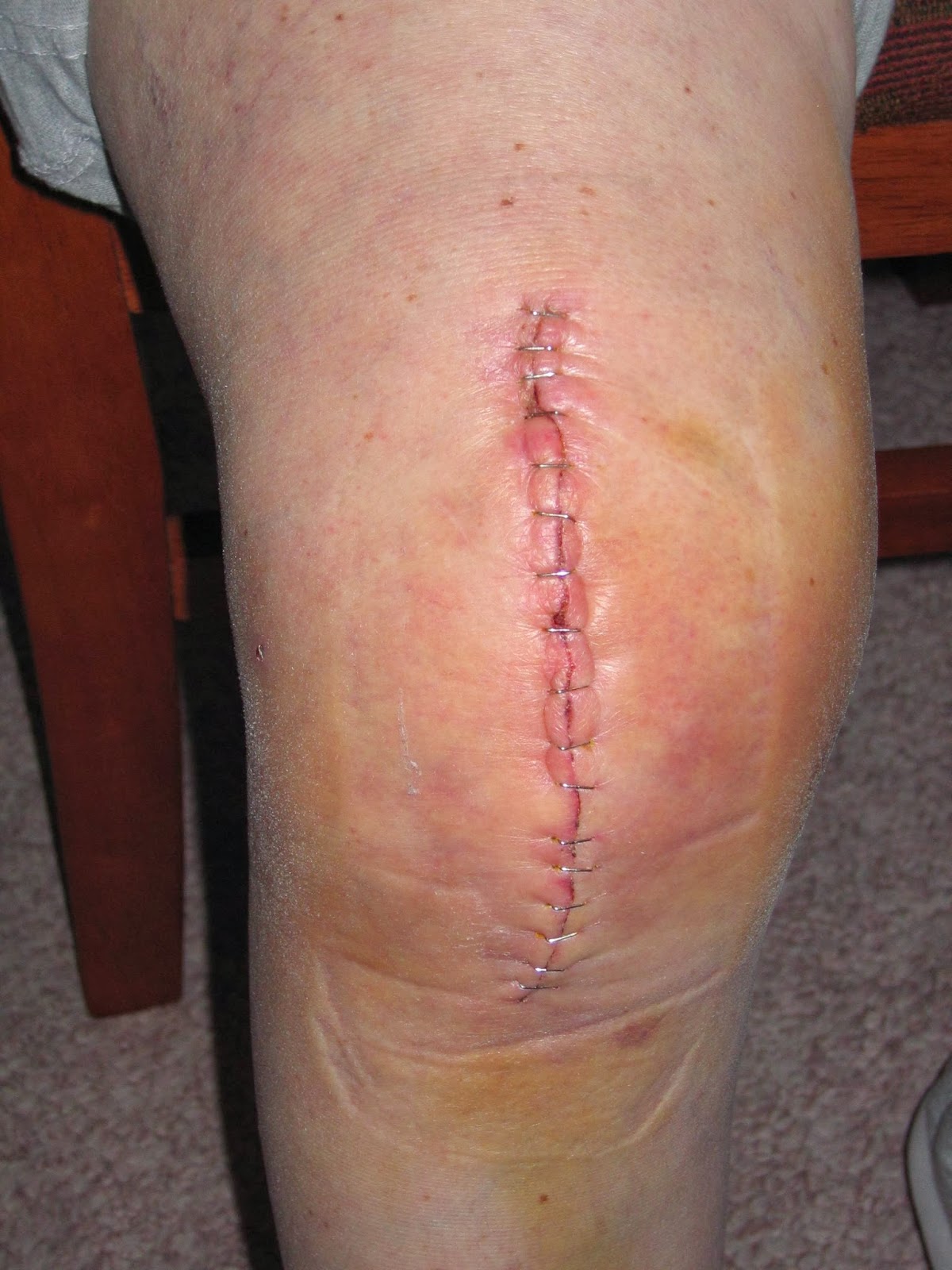 One alternative would be knee replacement surgery (gulp!). I have no intention of going in that direction. Just look at the surgery scars in the picture. Fuggetaboutit! I don't plan on entering any iron-man triathlons, so just getting around without much pain will work just fine for me.
The next step would be injections of hyaluronic acid, which can provide up to 6 months or more of pain relief for OA. This is sometimes referred to as "motor oil" for the knee, as it replaces the lost joint fluid causing the pain from OA. This typically requires 3 weekly injections to lubricate the knee joint. My doctor uses a brand called Orthovisc. Our good friend, Marilyn, has a similar knee problem to mine, and she has had two injections of a similar brand, Synvisc, over the past four years with great results. As of now, however, my knee feels OK, so I'll just keep that option in my back pocket.
I have been remiss in setting up a physical therapy (PT) appointment to help rehabilitate my knee, so today I made an appointment for early November. I hope to go to a couple of sessions to find out what exercises will help the most, and then perhaps continue them at home or at the gym. We'll see.
Monday, October 7, 2013
Farber, Knee, and LLS
After several weeks of relative quietude on the blogging front, I have more topics to cover today. This morning I had my monthly Farber appointment. I hadn't bothered to look at the schedule in detail--I just knew I had to be there at 10:15. When I got there and finally checked the appointments, I found there was good news and bad news. The good news was that I was scheduled to meet with Dr. Richardson! The bad news was that I was scheduled to meet with Dr. Richardson! The good part was that I haven't seen him since May, and I was delighted to have the opportunity to talk to him again directly about my situation. The bad part was that I knew it was going to be a long day.
While I was waiting, I met with Muriel. My numbers this month were great! The pathology results from last month confirmed no monoclonal gammopathy again, meaning I'm still in remission. The bilirubin, which I was concerned about last month, dropped from 1.7 to 1.0, back in the normal range. Muriel said that a number of patients on Rev maintenance have had similar random jumps in bilirubin with no apparent cause. While a high bilirubin can be indicative of liver problems, none of my other liver indicators are out of line, so it may just be a spurious side effect of the Revlimid. (Phew! I'll drink to that.) My neutrophil count continues to be great at 2.45, well into the normal range, despite the fact that I am taking Rev every day. Almost everything else was in the normal range. The only negatives were my HCT and Hgb counts, which have both dropped somewhat, which means my anemia is not getting any better. That may explain why I still need 9-10 hours of sleep every night, and I still often nap during the day. You know what? It's a small price to pay for how good I've been feeling.
By the way, my knee still feels great! I totally forgot to bring in the CDs with my Xrays and MRIs. Damn! Anyway, Muriel said that it was no big deal, because it won't affect any of my treatments at the Farber. They just want them for complete records, so hopefully, I'll remember to bring them next time. (Siri, remind me!) However, she did strongly suggest that I take advantage of the PT prescription I got from the ortho doc. It can only help, and after the cortisone wears off, it would be good to have built up some of the surrounding muscle. I can't say I disagree, so maybe I'll try it out for a session or two, and maybe I can continue to do the appropriate exercises at the gym on my own.
I'm glad I brought my computer and Kindle, so I was able to surf the Net and read while waiting for Dr. Richardson. He finally arrived at 1:50, two hours and 50 minutes behind schedule. I was thinking that might have set a new record for promptness, but not so. I checked my records, but in May he was only two hours and 40 minutes behind. It was definitely worth the wait though, as it always is.
After his examination, Dr. Richardson's overall assessment is that I am doing great! He also thinks that I am looking really good. It's nice to hear these words from him, because in the past he has been very blunt when he thinks otherwise. I left the meeting with him feeling super! Have I ever mentioned that I am really grateful that he is my doctor?
While waiting for Richardson, I perused the DFCI internal publication, "Inside the Institute", which had an interesting article about a $6 million grant from the Leukemia and Lymphoma Society (LLS) to Dr. Irene Ghobrial, one of Richardson's colleagues, to study the biology of clonal evolution of MM to help develop drugs to prevent the progress of the malignancies. The objective is to help find ways to prevent the progression of precursor conditions (such as MGUS and Smoldering Myeloma) to full blown MM, by finding why MM cells attack the bone marrow and what factors instigate the clonal mutations causing the malignancies. If such an approach could successfully stymie progression from precursor MM to active MM, perhaps the same approach could also help prevent those in remission from relapsing. I don't know, but it occurs to me that it would be a reasonable possibility. I'm excited by this research direction, and from all I have read so far about this, I feel that in addition to the powerful new drugs becoming available, treating clonal mutation abnormalities at the molecular level will eventually lead to individualized treatment regimens and potentially a cure for MM.
I brought this subject up with Dr. Richardson, and he acknowledged that the entire Farber team is involved in this research, and it is a very promising endeavor. Let's just hope!
While I was waiting, I met with Muriel. My numbers this month were great! The pathology results from last month confirmed no monoclonal gammopathy again, meaning I'm still in remission. The bilirubin, which I was concerned about last month, dropped from 1.7 to 1.0, back in the normal range. Muriel said that a number of patients on Rev maintenance have had similar random jumps in bilirubin with no apparent cause. While a high bilirubin can be indicative of liver problems, none of my other liver indicators are out of line, so it may just be a spurious side effect of the Revlimid. (Phew! I'll drink to that.) My neutrophil count continues to be great at 2.45, well into the normal range, despite the fact that I am taking Rev every day. Almost everything else was in the normal range. The only negatives were my HCT and Hgb counts, which have both dropped somewhat, which means my anemia is not getting any better. That may explain why I still need 9-10 hours of sleep every night, and I still often nap during the day. You know what? It's a small price to pay for how good I've been feeling.
By the way, my knee still feels great! I totally forgot to bring in the CDs with my Xrays and MRIs. Damn! Anyway, Muriel said that it was no big deal, because it won't affect any of my treatments at the Farber. They just want them for complete records, so hopefully, I'll remember to bring them next time. (Siri, remind me!) However, she did strongly suggest that I take advantage of the PT prescription I got from the ortho doc. It can only help, and after the cortisone wears off, it would be good to have built up some of the surrounding muscle. I can't say I disagree, so maybe I'll try it out for a session or two, and maybe I can continue to do the appropriate exercises at the gym on my own.
I'm glad I brought my computer and Kindle, so I was able to surf the Net and read while waiting for Dr. Richardson. He finally arrived at 1:50, two hours and 50 minutes behind schedule. I was thinking that might have set a new record for promptness, but not so. I checked my records, but in May he was only two hours and 40 minutes behind. It was definitely worth the wait though, as it always is.
After his examination, Dr. Richardson's overall assessment is that I am doing great! He also thinks that I am looking really good. It's nice to hear these words from him, because in the past he has been very blunt when he thinks otherwise. I left the meeting with him feeling super! Have I ever mentioned that I am really grateful that he is my doctor?
While waiting for Richardson, I perused the DFCI internal publication, "Inside the Institute", which had an interesting article about a $6 million grant from the Leukemia and Lymphoma Society (LLS) to Dr. Irene Ghobrial, one of Richardson's colleagues, to study the biology of clonal evolution of MM to help develop drugs to prevent the progress of the malignancies. The objective is to help find ways to prevent the progression of precursor conditions (such as MGUS and Smoldering Myeloma) to full blown MM, by finding why MM cells attack the bone marrow and what factors instigate the clonal mutations causing the malignancies. If such an approach could successfully stymie progression from precursor MM to active MM, perhaps the same approach could also help prevent those in remission from relapsing. I don't know, but it occurs to me that it would be a reasonable possibility. I'm excited by this research direction, and from all I have read so far about this, I feel that in addition to the powerful new drugs becoming available, treating clonal mutation abnormalities at the molecular level will eventually lead to individualized treatment regimens and potentially a cure for MM.
I brought this subject up with Dr. Richardson, and he acknowledged that the entire Farber team is involved in this research, and it is a very promising endeavor. Let's just hope!
Tuesday, October 1, 2013
Overdue Update
One of my loyal readers emailed me yesterday saying she misses seeing frequent updates to my blog, which was a nice way of telling me to get off my lazy ass and start writing. Guilty as charged! I don't why I took this little vacation. It's not that I'm so busy that I can't fit writing this blog into my crammed schedule of meetings and social events. As a matter of fact, as I look over my calendar, it is nearly blank, sad to say. No, just a little laziness and procrastination. Over the years, I have elevated the process of procrastinating to a fine art, sometimes to my chagrin. In any case, I'm back.
When we last left the saga of my thrilling adventures, I had just left the orthopedic doctor's office with a shot of cortisone in my right knee. Wow! That's pretty good stuff. My knee immediately felt better, and it still does. I can now walk and negotiate stairs with minimal pain. I even walked a 9-hole golf course a few days ago with no discernible aftereffects. It's still not perfect, but it's "100% better", as they say.
Now that I think of it, I'm not sure what 100% better is supposed to mean. Better than what? For example, if I started out only 5% good and got 100% better, I would still only be 10% good, right? Conversely, if I started out 90% good, I'd only have to get better by 11.1% to be perfect again. Maybe I just have an odd way of looking at things. Anyway, I digress.
By the way, a cortisone shot in the knee is no walk in the park. However, on a relative scale, it sure beats the shit out a bone marrow biopsy. I'm not sure how long this cortisone shot will last. The physicians assistant said it could last anywhere from 3 weeks to 3 years. Typically, I guess 6 months would be a reasonable expectation. After that, I don't know what might come next. In the mean time, I'll try not to do anything too strenuous with it.
I'm feeling really good, although I still sleep more than I used to. I've pretty much adjusted to that. Yesterday I got my flu shot and next Monday, I go back to the Farber for another monthly checkup and Zometa infusion. That will begin the 15th month of my clinical trial maintenance therapy with the 5 mg of Revlimid daily. If I can stay in remission for another 22 months, then I can go off the Rev completely, and maybe the Zometa as well. I'm looking forward to that. I'm very upbeat about how everything has gone so far. In fact, as a testament to my optimism, I just took the plunge and renewed my AARP membership for another 5 years!
The writing seminar at the Farber has started up again for the fall. Unfortunately, I missed the September workshop because of my knee appointment. I hope to be able to attend the October one on the 28th. I could use a shot in the arm to bolster my inspiration to keep writing..
When we last left the saga of my thrilling adventures, I had just left the orthopedic doctor's office with a shot of cortisone in my right knee. Wow! That's pretty good stuff. My knee immediately felt better, and it still does. I can now walk and negotiate stairs with minimal pain. I even walked a 9-hole golf course a few days ago with no discernible aftereffects. It's still not perfect, but it's "100% better", as they say.
Now that I think of it, I'm not sure what 100% better is supposed to mean. Better than what? For example, if I started out only 5% good and got 100% better, I would still only be 10% good, right? Conversely, if I started out 90% good, I'd only have to get better by 11.1% to be perfect again. Maybe I just have an odd way of looking at things. Anyway, I digress.
By the way, a cortisone shot in the knee is no walk in the park. However, on a relative scale, it sure beats the shit out a bone marrow biopsy. I'm not sure how long this cortisone shot will last. The physicians assistant said it could last anywhere from 3 weeks to 3 years. Typically, I guess 6 months would be a reasonable expectation. After that, I don't know what might come next. In the mean time, I'll try not to do anything too strenuous with it.
I'm feeling really good, although I still sleep more than I used to. I've pretty much adjusted to that. Yesterday I got my flu shot and next Monday, I go back to the Farber for another monthly checkup and Zometa infusion. That will begin the 15th month of my clinical trial maintenance therapy with the 5 mg of Revlimid daily. If I can stay in remission for another 22 months, then I can go off the Rev completely, and maybe the Zometa as well. I'm looking forward to that. I'm very upbeat about how everything has gone so far. In fact, as a testament to my optimism, I just took the plunge and renewed my AARP membership for another 5 years!
The writing seminar at the Farber has started up again for the fall. Unfortunately, I missed the September workshop because of my knee appointment. I hope to be able to attend the October one on the 28th. I could use a shot in the arm to bolster my inspiration to keep writing..
Subscribe to:
Posts (Atom)